
The TRIZ Method
Understand and apply the innovation method that revolutionised technical problem solving.
Born from the analysis of 400,000 patents, TRIZ offers 40 principles and a matrix to resolve your contradictions.
Understand and apply the innovation method that revolutionised technical problem solving.
Born from the analysis of 400,000 patents, TRIZ offers 40 principles and a matrix to resolve your contradictions.
TRIZ is a method for solving technical problems. Its name comes from the Russian "Teoriya Resheniya Izobretatelskikh Zadatch", which translates to Theory of Inventive Problem Solving.
The core idea is straightforward: technical problems, even in very different fields, are often solved using the same types of solutions. An aerospace engineer and a packaging designer may face the same fundamental contradiction and resolve it with the same innovation principle.
TRIZ does not replace technical expertise. It provides a structured framework to explore solution paths that would not come to mind spontaneously.
Genrich Altshuller, a Soviet engineer and inventor, began his research in the 1940s. At the time, he was a patent examiner for the Soviet Navy. By analysing thousands of patents, he made the observation that would become the foundation of TRIZ:
Inventive solutions rely on a limited number of principles, and these principles recur across different technical fields.
Between 1946 and 1985, Altshuller and his team analysed over 400,000 patents worldwide. From this analysis emerged the foundations of TRIZ:
Kept confidential for decades (TRIZ remained within the USSR until the fall of the Berlin Wall), the method spread worldwide from the 1990s onwards.
In engineering, we often seek to improve one characteristic of a system. The problem is that improving one parameter frequently degrades another. This is what TRIZ calls a technical contradiction.
You are designing a mechanical structure and want to increase its strength. The conventional solution would be to add more material, but this also increases the mass. Wanting to increase strength without increasing mass: this is a typical TRIZ contradiction.
The traditional approach involves making a trade-off (a bit more mass for a bit more strength). TRIZ proposes something different: resolve the contradiction rather than work around it, by drawing on principles already proven in other contexts.
In practice, you translate the problem by selecting two parameters in the TRIZ matrix: the parameter to improve and the one to preserve. The matrix then indicates the most suitable innovation principles.
At the heart of TRIZ lie 40 innovation principles. Each principle describes a resolution strategy proven across thousands of patents. Here are a few examples:

Divide an object into independent parts. For instance, a stick vacuum cleaner whose handheld unit detaches to become a separate handheld vacuum.
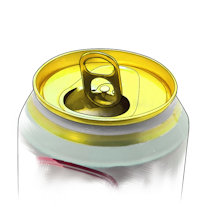
Perform (fully or partially) a required change before it is actually needed. For example, pre-drilled holes in flat-pack furniture allow immediate assembly.
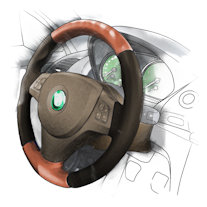
Make an object, process or environment adaptable or mobile. For example, a flexible vacuum cleaner hose that bends to reach every corner.

Change the physical state of an object (solid, liquid, gas). For example, LPG is stored as a liquid in a bottle to reduce its transport volume.
These principles do not provide ready-made solutions. They open avenues of exploration that your technical expertise can then turn into concrete answers.
The contradiction matrix is the central tool of TRIZ. It is a cross-reference table of 39 technical parameters (mass, speed, strength, reliability, etc.).
Let's say you want to make packaging stronger without making it heavier. Here is how the matrix guides you:
Altshuller's original matrix was built from the statistical analysis of hundreds of thousands of patents. It represents a form of "collective memory" of technical innovation: for each type of contradiction, it indicates the strategies that have most often succeeded.
TRIZ is used worldwide, from electronics to aerospace and consumer goods.
Samsung adopted TRIZ in 2000 by inviting Russian experts to its laboratories. By 2003, the method had generated 50 new patents. In 2004, a single TRIZ project (DVD pick-up innovation) saved an estimated $100 million. TRIZ became a mandatory skill for career advancement at Samsung, including for subsidiary CEOs. (Source: Altshuller Institute, AITRIZ.org)
Intel deployed TRIZ across its semiconductor manufacturing processes. According to a case study verified by Intel's Finance department, the return on investment exceeded $212 million over 21 months. (Source: "TRIZ Development at Intel Corporation")
For an industrial key switch with assembly issues, Siemens engineers applied TRIZ principle no. 7 (nesting) by replacing a plunger with a telescopic rod. Result: production costs cut by a third, smaller size, and the solution was found within two weeks.
How do you stop a crayon from drawing on walls without removing its ability to write? By applying the separation by condition principle, Crayola designed a special crayon that only works on dedicated paper. It writes normally on the right surface, but not on unauthorised ones.
Among the companies that have documented their use of TRIZ: Boeing, Airbus, General Electric, LG, Procter & Gamble, Ford, BMW, Philips, Johnson & Johnson, as well as NASA and the European Space Agency.
One of TRIZ's key strengths is that its principles are transferable across technical fields: mechanical, electronics, chemistry, software, industrial processes. A solution proven in aerospace can inspire an innovation in packaging or electronics.
The ASIT method (Advanced Systematic Inventive Thinking) is an approach derived from TRIZ, developed by Roni Horowitz at Tel Aviv University. It takes the fundamental principles of TRIZ and optimises them for faster and more operational use.
Where TRIZ offers 40 principles and a matrix of 39 parameters, ASIT focuses on 5 tools and two conditions. It serves as an effective gateway to structured inventive thinking, particularly suited to contexts where resolution time is limited.
On TRIZ40, logged-in users get an ASIT complement in the interactive matrix: for each contradiction, an ASIT block appears with the corresponding ASIT tool, a disruptive question and a solution lead. A concrete bridge between both methods, built right into the tool.
Discover the link between TRIZ and ASIT